
Petriflow 102 - Part 4
Types of Arcs: Read, Inhibitor & Reset Arcs
💡 What you'll learn
Understand how different types of arcs extend the expressive power of Petri nets - particularly read arcs, inhibitor arcs, and reset arcs - and how they influence token flow and transition enabling in Petriflow.
Overview
Goal & Context
This final part of the Petriflow 102 lecture introduces special arc types beyond standard input/output connections. These arcs are crucial for defining conditions, constraints, and reset mechanisms within process models.
The section covers:
- Standard arcs and their role in token movement
- Read arcs - testing presence of tokens
- Inhibitor arcs - preventing firing under certain conditions
- Reset arcs - removing all tokens from connected places
Each arc type provides a different way to control workflow logic.
Standard Arcs Recap
Basic Arcs
Standard arcs in a Petri net consume tokens from input places and produce tokens in output places when a transition fires.
| Arc Type | Direction | Behavior |
|---|---|---|
| Input arc | Place → Transition | Removes tokens when firing |
| Output arc | Transition → Place | Adds tokens when firing |
These arcs define the basic causal flow of activities.
Read Arcs
Definition & Example
A read arc connects a place to a transition but does not consume tokens. It merely tests whether the place contains a required number of tokens before allowing the transition to fire.
| Property | Description |
|---|---|
| Purpose | Checks if a token exists without changing marking |
| Symbol | Small circle or special arc indicator |
| Condition | Tokens ≥ multiplicity |
Example scenario:
- A transition “Start Engine” has a read arc from place “Battery Charged”.
- It can fire only if the battery is charged, but firing doesn’t consume the charge token.
NOTE
In Petriflow simulation, read arcs act like catalysts - conditions that must hold true but don’t alter the state.
Inhibitor Arcs
Definition & Logic
An inhibitor arc prevents a transition from firing if too many tokens are present in a place.
It introduces negative conditions - “this task can only occur if something is not true.”
| Property | Description |
|---|---|
| Purpose | Disables transitions when tokens ≥ multiplicity |
| Condition | Tokens < multiplicity |
| Common Use | Prevents overproduction or mutual exclusion |
Example:
- Task “Cool Reactor” may fire only if temperature < 10 tokens (representing degrees or units).
- This models a less-than condition, while read arcs model greater-than-or-equal.
A special case occurs when multiplicity = 1: this checks for emptiness of a place.
NOTE
Originally, inhibitor arcs were introduced in classical Petri net theory to test whether a place is empty, and later generalized to handle thresholds.
Reset Arcs
Purpose & Behavior
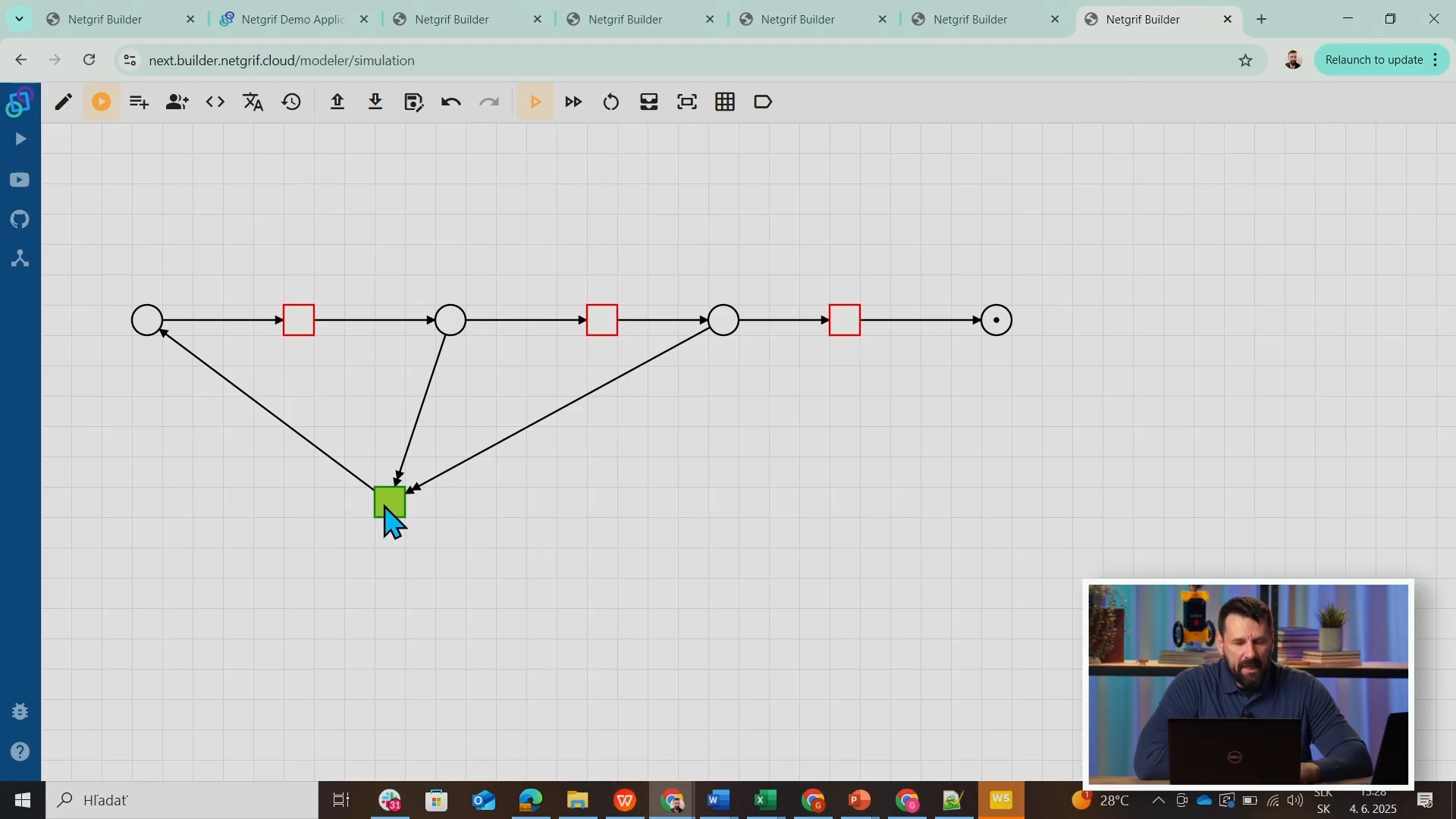
A reset arc clears all tokens from a place when its connected transition fires - regardless of how many there are.
| Property | Description |
|---|---|
| Purpose | Removes all tokens from connected place |
| When Used | To restart or abort processes |
| Condition | Independent of current marking |
| Effect | Sets place token count to zero |
Example:
- In a multi-step workflow, a “Reset Process” task can be triggered to clear all progress and return to start.
- This simulates an emergency stop or full rollback of the process state.
NOTE
Reset arcs do not determine whether a transition can fire - only what happens when it does.
They remove all tokens in their connected places, representing variable multiplicity that depends on the current marking.
Comparative Summary
| Arc Type | Condition | Effect on Tokens | Typical Use |
|---|---|---|---|
| Standard Arc | Requires tokens | Consumes/produces tokens | Normal workflow flow |
| Read Arc | Tokens ≥ N | No token change | Check condition (catalyst) |
| Inhibitor Arc | Tokens < N | No token change | Prevent over-enabling |
| Reset Arc | Always enabled | Removes all tokens | Reset or cleanup logic |
Video
Watch Petriflow 102 - Part 4 (36:29 – End).
Visual steps
1️⃣ Read Arc Example
Transition checks presence of a token but doesn’t consume it.
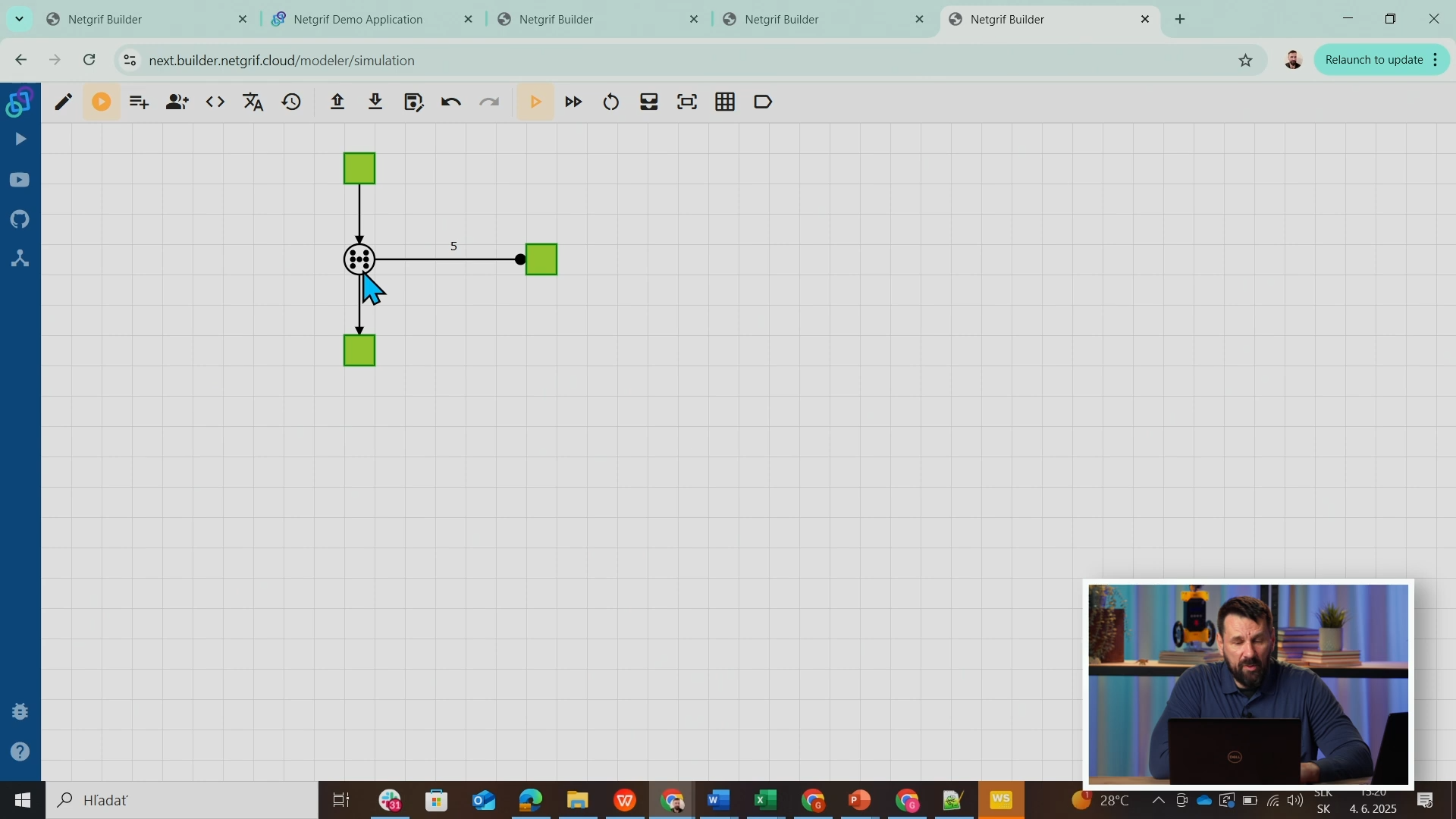
2️⃣ Inhibitor Arc Example
Transition only fires when connected place is empty or below threshold.

3️⃣ Reset Arc Example
Transition clears all tokens from connected place upon firing.
Summary
| Concept | Description |
|---|---|
| Read Arcs | Test conditions without changing token marking |
| Inhibitor Arcs | Disable transitions when too many tokens exist |
| Reset Arcs | Remove all tokens, resetting a place |
| Use in Petriflow | Enables conditional and restart behaviors within workflows |
Takeaway:
Advanced arc types make Petri nets and Petriflow more expressive and realistic.
They support conditional control, resource constraints, and state resets, helping model complex workflow logic beyond linear task flows.
You now understand:
- How read arcs differ from standard arcs
- How inhibitor arcs express negative conditions
- How reset arcs manage process restarts
- Why these mechanisms are crucial in real-world process automation